The Challenge
Fertility is assumed unless proven otherwise, yet few women are taught what natural fertility actually is or how their hormonal rhythms connect to overall health — from mood to metabolism. Hormonal birth control is often prescribed by default, even preemptively. It hijacks the body’s natural communication between the brain and ovaries, masking underlying imbalances and bypassing deeper understanding.
Furthermore, while most women want to have children at some point, we rarely talk about our fertility life goals until the moment is right in front of us. We plan for our careers, finances and other life milestones — yet not our family-building timeline. Many women suppress ovulation for years with daily hormonal birth control, without ever having a conversation about what’s happening in their bodies or what their “normal” looks like. If having children is a life goal, it’s a conversation that needs to start earlier — with education, body literacy and an understanding of what fertility actually means long before it becomes urgent.
In short, women are under-educated, under-tested and under-supported — not because we are ignored, but because the system was never designed to help us understand our own bodies. With so much conflicting (and commercialized) information, many women don’t know where to start. What should feel empowering ends up feeling incredibly intimidating.
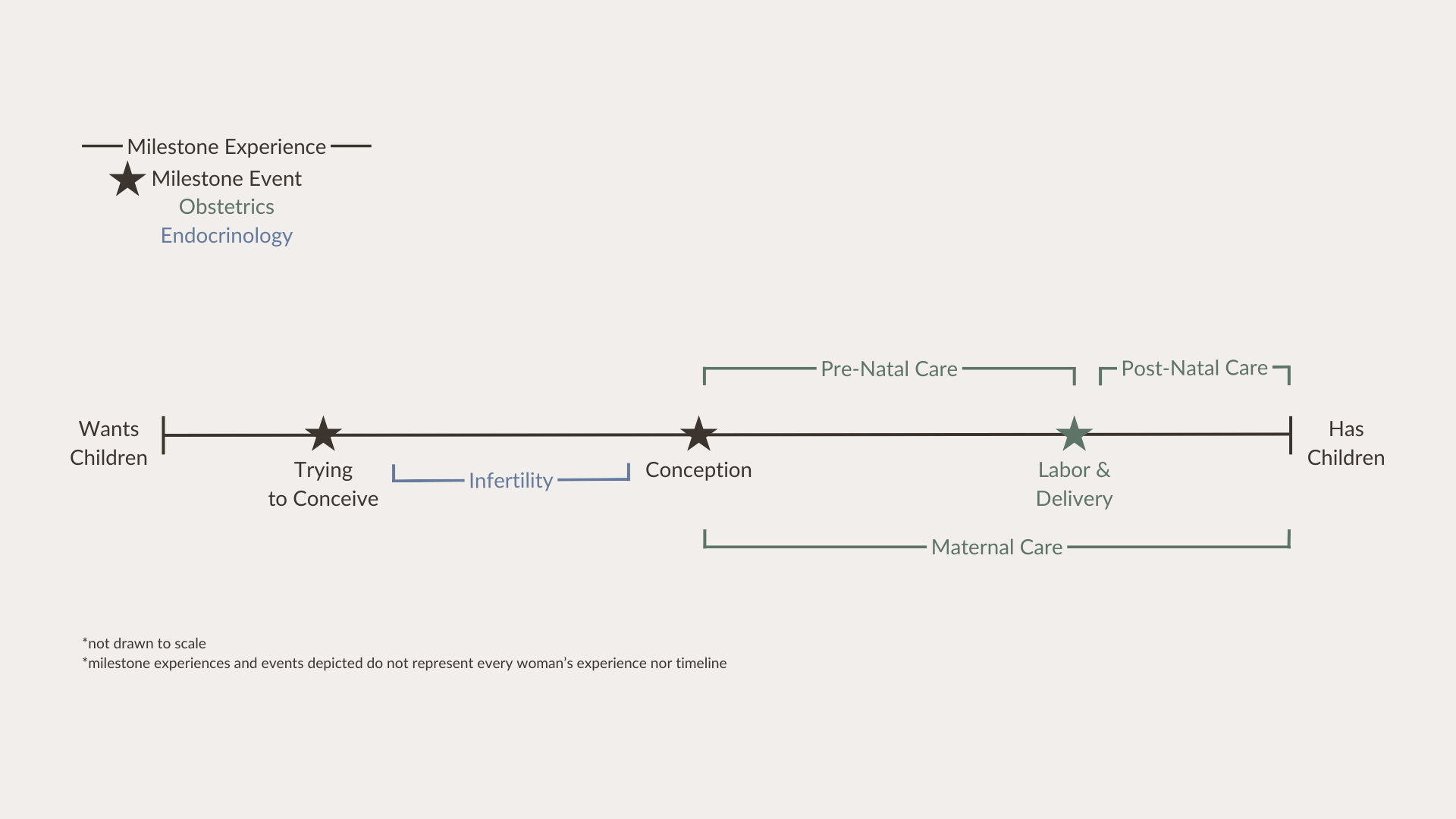
Today’s healthcare system is not built for proactive women’s healthcare. Most providers are doing their best within a reactive model of care that prioritizes disease management over education, preparation and prevention.
Care today is limited by:
A lack of foundational education around how hormones, fertility and aging interact
Short appointments that leave little time for explanation or context
Reactive testing, warranted only when symptoms become severe
“Normal” lab ranges that reflect population averages, not optimal health
As a result, women are left to navigate a fragmented, confusing system on their own. They face:
Growing rates of hormone-related symptoms (fatigue, acne, cycle irregularity, mental health challenges, etc.)
Unexplained fertility struggles and delayed diagnoses
Burnout from trying to “figure it out” solo (often through self-research and social media)
Feeling “off” despite “normal” results — and being told “everything looks fine”